'Dreams' of falling in love and getting published
Norwegian drama follows a young writer's awakening

Something clicked for me when I learned that “Dreams” is part of a trilogy of films by a novelist, Norwegian writer Dag Johan Haugerud. First of all, the film is about 75% narration; close your eyes, and it’s almost an audiobook.
Secondly, for a film that’s ostensibly about a teenage girl’s romantic obsession with her teacher, it contains a surprising amount of satire about writing and the publishing industry. It all leads to a film that’s headier and more chaste than one might expect, given that the subject matter is of the sort that Ryan Murphy would turn into a Netflix limited series.
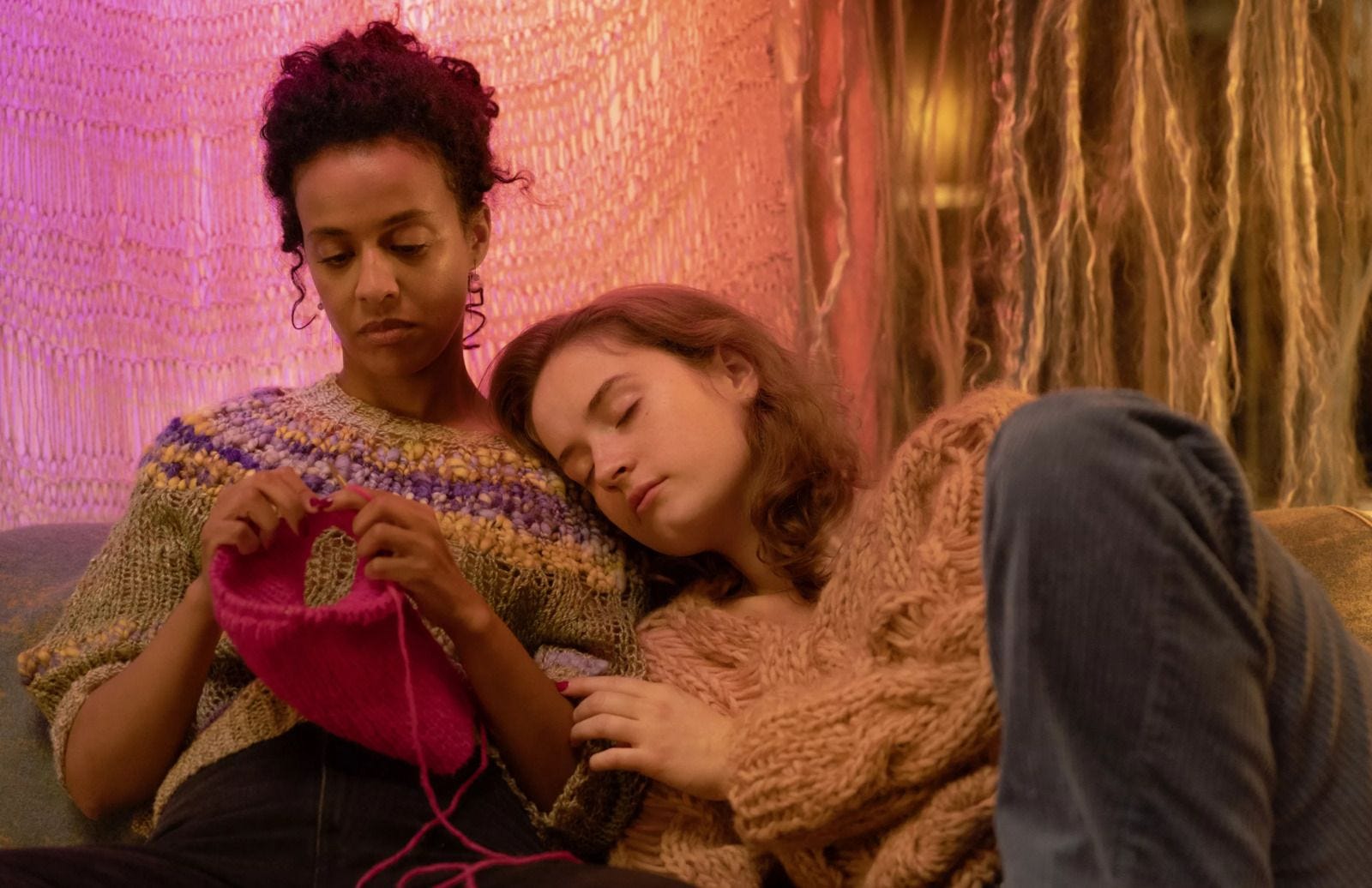
“Dreams” is almost a parody of a Scandinavian love story, where the most erotic scene involves two characters trying on sweaters. But with a strong lead performance and a dry wit, “Dreams” is intriguingly clear-headed about matters of the heart.
The emotional inner life of 17-year-old Johanne (Elle Overbye) is awakened by, of course, a book. She finds a romance novel among the shelves of her grandmother Karin (Anne Marit Jacobsen), and is immediately taken by the fevered prose of the love scenes. In particular, she’s taken by a passage in which the man lovingly winds a long scarf around the woman’s neck. When she shows up at school next, she’s wearing just such a scarf. So perhaps she’s in a romantic state of mind when she sees her new teacher, Johanna (Selome Emnetu) and is instantly, deeply smitten.
“Dreams” is almost a parody of a Scandinavian love story, where the most erotic scene involves two characters trying on sweaters.
The first half of “Dreams” rapturously charts Johanne’s unrequited obsession. In real life, we see her intense gaze on her oblivious teacher, while in the voiceover narration she beautifully expresses the emotions churning inside her. Every word, every gesture by Johanna is obsessed over by Johanne. Though they never get closer than one affectionate hug, the film is suffused with Johanne’s longing.
But after Johanna politely but firmly puts some distance between her and her student, “Dreams” shifts to becoming about the 95-page manuscript that Johanne has written about the experience (from which the narration presumably is drawn from). We get the sense that Johanne has put some things in her short book that didn’t happen in real life, spilling her fantasies about Johanna onto the page.
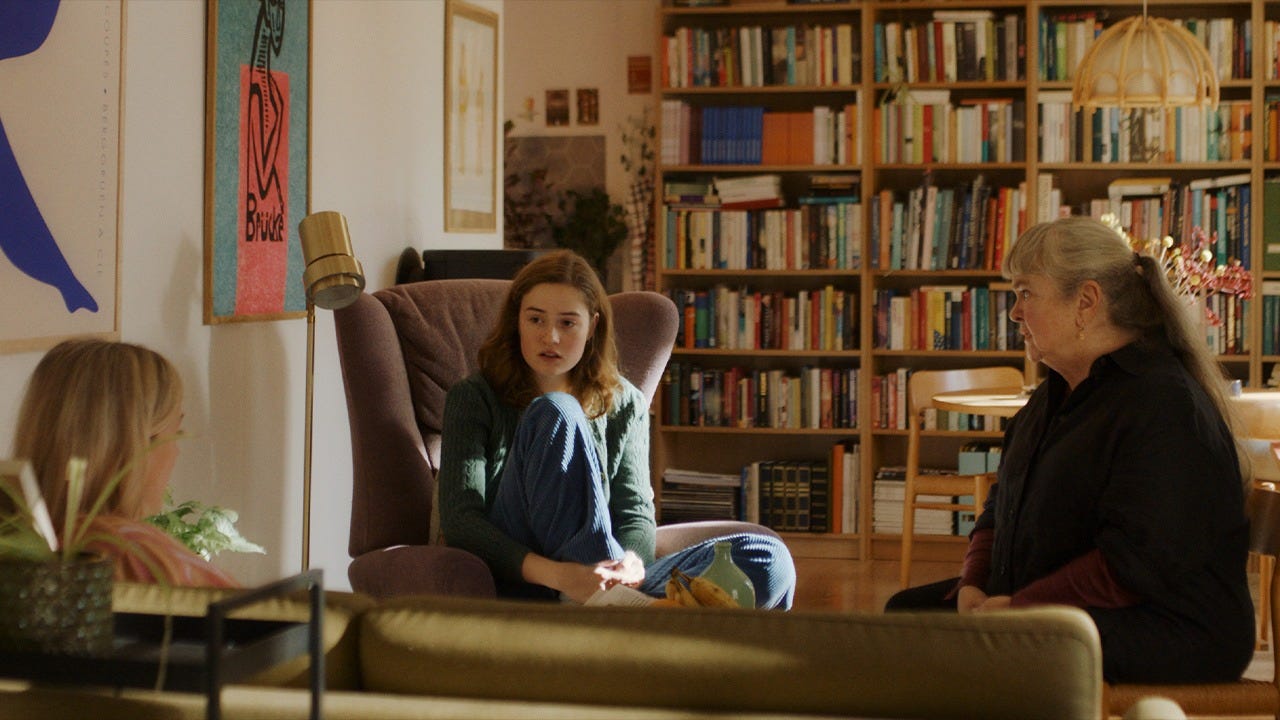
The second half of “Dreams” is mostly a literary debate between Karin and Johanne’s mother, Kristin (Ane Dahl Torp) after they read Johanne’s manuscript. Is it memoir? Is it autofiction? Is it pure fiction? Was she traumatized by the experience? Or is the act of writing about her obsession a way for Johanne to work through her feelings? And, finally, should they try to get it published?
It’s a lot of questions, and “Dreams” leaves a lot of room for the three generations of women to debate them. Maybe too much – the film ends somewhat sedately after such an emotionally intense first half. But Overbye’s performance as Johanne is worth seeing, as she transforms her from a desperate teenager to a more assured adult. She may not have gotten what she wanted in the classroom, but she found it on the page.
“Dreams” has its Madison premiere at 7 p.m. Thursday at UW Cinematheque, 4070 Vilas Hall. The screening is free and open to the public.